War is terrifying. Our biggest concern is the potential loss of life. But as investors, we must also consider the economic implications.
Energy Markets Under Threat
In the current conflict in Iran, the main economic risk comes from disruptions to shipping routes through the Strait of Hormuz. This narrow waterway connects the Persian Gulf with the Arabian Sea and the broader ocean. Approximately 20% of global oil production normally goes through the Strait, originating from countries such as Saudi Arabia, Iraq, Iran, and the United Arab Emirates.
By threatening to attack any ships in the Strait, Iran has effectively stopped this traffic, causing the global price of oil to jump by around 50%-100%.
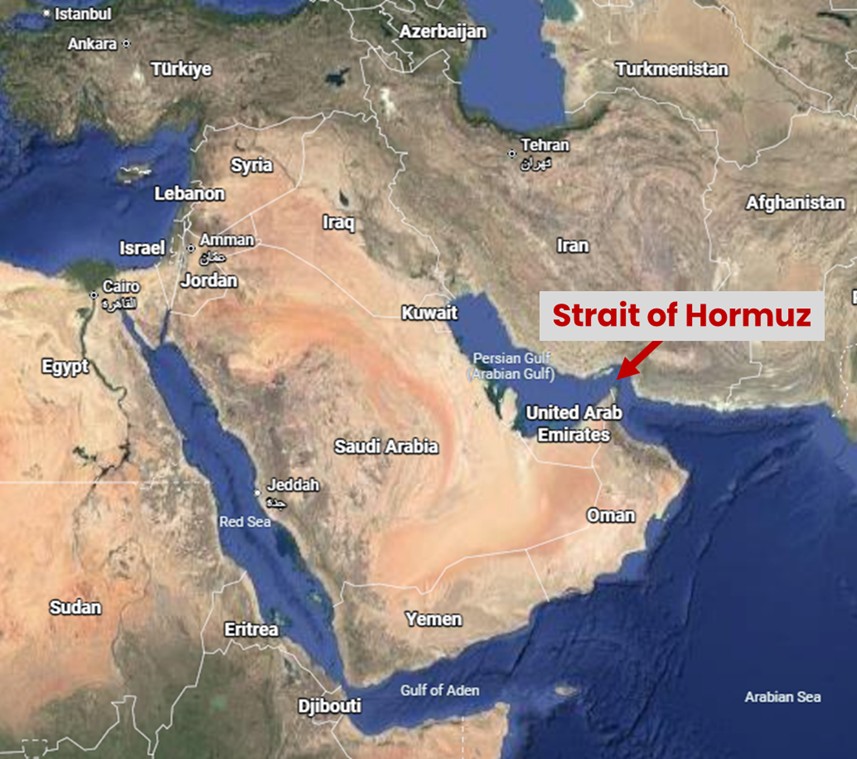
Source: Google Maps
Inflationary Pressures and Economic Anxiety
Oil is an input to so much economic activity. Every physical good must be transported by ship, rail, or truck at some point, all of which run on oil products. Oil is a raw material for plastics and many other goods. Higher energy prices tend to feed inflation.
War can also cause general economic anxiety. Consumers may be more inclined to save and less inclined to spend, especially on discretionary purchases like travel (where there may also be heightened safety concerns). Banks may be less inclined to lend to businesses and consumers, especially if credit losses start to rise.
Should You Own Stocks in a War?
So, you probably shouldn’t own stocks in a war, right? Well, not so fast…
Defensive Sectors and Services
First, there are plenty of businesses with economically defensive revenues and minimal exposure to oil prices. Nearly 80% of U.S. gross domestic product comes from services, rather than physical goods that must be manufactured and transported. Think of healthcare, communications, or much of the technology sector. Then there are industries that benefit directly from a war, such as energy producers and defense contractors.
The Broader Market Context
Second, there are thousands of factors influencing the stock market at any given time—a war on the opposite side of the world is only one of the thousands. Artificial intelligence will likely have a far greater impact on technology companies than the Iran conflict. The real estate industry will be watching interest rates. Healthcare and financial services firms must pay close attention to regulatory developments.
Stocks as an Inflation Hedge
Third, war is inflationary, and not just because of the jump in oil prices. Spending on defense tends to increase government budget deficits. Stocks can be one of the best inflation hedges: They represent ownership in real-world businesses that often have the option to raise prices. By contrast, inflation erodes the value of bonds with fixed coupon payments.
Expansionary Effects of War-Time Production
Lastly, increased government spending and war-time production can also have an expansionary effect on the economy. World War II was widely credited with helping end the Great Depression.
How Has the Stock Market Reacted to Past Wars?
The United States has been involved in many global conflicts over the past 100 years. We looked at six of the biggest wars to see how stocks reacted. On average, we find that the S&P 500 was up nearly 7% in the three months after the start of the war, 15% over the next year, and 90% over the next five years (13.7% per year). That’s better than the long-run historical average return around 10%-11% per year!

Conclusion: Stay the Course
There’s no guarantee that the Iran War will play out similarly to past conflicts. But there’s also nothing in the stock market’s history to suggest war is a reason for investors to panic. As always, we recommend discipline, patience, and focusing on your long-term financial goals and risk tolerance.
Consult with a Fiduciary Advisor
To discuss your personal financial planning and wealth management needs, reach out to a Trajan Wealth fiduciary advisor today.