When the stock market falls, the right response is usually to hold your course: keep investing on schedule, rebalance to your target allocation, and avoid selling at a loss. The S&P 500 has delivered positive full-year returns in 33 of the past 40 years, averaging 11% annually. History rewards patience over panic.
What to Do During a Market Downturn
When the stock market falls, the hardest part isn’t understanding why, it’s deciding what to do about it. Your account balance is dropping, the headlines are grim, and doing something feels urgent.
Here’s the reassuring truth first: Declines are a normal part of investing. The S&P 500 has experienced some level of drawdown in each of the past 40 years, from the 2.8% peak-to-trough decline in 2017, to the 49% collapse in 2008. Yet the S&P 500 still delivered a positive full-year return in 33 of those 40 years, averaging an 11% compound annual total return over the full period.*
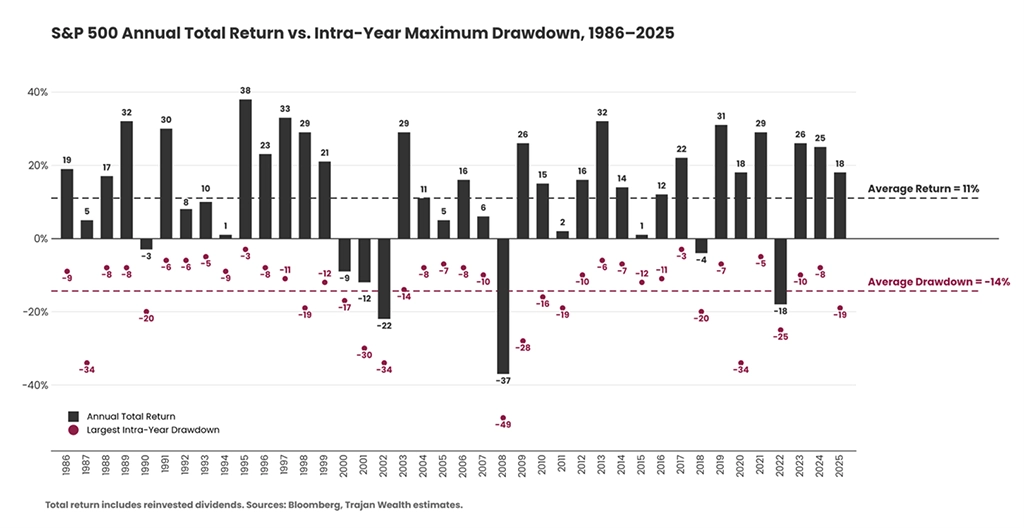
Historically, investors have been rewarded for discipline and patience, not knee-jerk reactions. So, here’s what to do when the stock market takes a tumble:
Focus on Your Plan, Not the Headlines
The best time to decide how you’ll handle a market downturn is before one arrives. If you’ve already worked out your goals, your time horizon, and your risk tolerance, then a falling market isn’t a reason to change course. It’s the moment your plan was built for.
Ask yourself a simple question: Has anything actually changed about my life, my goals, or when I’ll need this money? If the answer is no, the market’s mood swing doesn’t require a response.
Keep Investing on Schedule
If you’re regularly adding money to your accounts, through a workplace retirement plan or automatic monthly deposits, the most powerful move during a downturn is simply to keep investing.
When prices fall, your regular contributions buy more shares for the same dollar amount. You’re effectively buying at a discount. That leaves you with a larger position when the market eventually recovers.
Rebalance Back to Your Target Allocation
A sharp decline can quietly change your asset allocation. If stocks fall while bonds hold steady, you may end up with a smaller weighting in stocks than you intended. Rebalancing helps you return to your intended risk/reward profile.
It can feel unnatural to sell an asset that is maintaining its value to buy one that just dropped. But that’s exactly the discipline that drives a successful financial plan. Rebalancing is an automatic way to buy low and sell high.
Look for Tax Savings
Downturns can create one genuine silver lining in taxable accounts: the chance to harvest losses. Selling an investment that’s down and replacing it with a similar one lets you capture the loss for tax purposes while staying invested in the market. That captured loss can offset gains elsewhere, and sometimes a portion of your regular income, lowering your tax bill.
The rules here can be tricky, so it’s best to talk with both your financial advisor and tax advisor before acting. For Trajan Wealth clients, our in-house tax and financial advisors work together directly to ensure your plans align.
Protect Yourself from Being a Forced Seller
The real danger in a downturn isn’t the decline itself. It’s being forced to sell while prices are low because you need the cash. That’s what turns a temporary drop on paper into a permanent loss.
The fix is to line up your cash needs ahead of time. Keep a cash emergency fund for unexpected expenses, plus a bond buffer to get you through the next few years (especially if you’re retired). When your near-term needs are covered, you can leave your long-term investments alone and give them time to recover.
What Not to Do
Just as important as the list above is the one thing to avoid: selling in a panic. Selling during a downturn locks in your losses and, just as damaging, tends to leave you on the sidelines when the market rebounds. The investors who get hurt most in bear markets are usually the ones who sell low and then wait too long to get back in. Historically, when the market has fallen 20% over a 12-month period, on average it’s bounced back 23% over the next year and 88% over the next five years.*
Checking your account balance every day or stewing over scary headlines makes that mistake far more likely. Give yourself permission to check your accounts less often. Your long-term plan doesn’t need your minute-to-minute attention.
When in Doubt, Talk It Through
If you’re tempted to make a big change, it’s time to call your fiduciary advisor. A good advisor’s job is partly to talk you through exactly these moments, to separate your long-term goals and risk tolerance from what’s happening in the news, and to keep a temporary decline from derailing a financial plan built for decades.
Discipline and patience are what turn market downturns into non-events over a long investing life. If you’d like a partner to help you stay on track, contact Trajan Wealth.
* Source: Bloomberg, Trajan Wealth Estimates