When you start investing, you will hear a lot about geographic exposure (where in the world your money is), sector exposure (the industries you are investing in), and your stock/bond mix. These elements form the foundation of your investment strategy and are designed to match your specific risk tolerance. However, once these targets are set and your money is invested, it’s easy to overlook how they change over time. Portfolio rebalancing is often an overlooked principle of keeping your plan aligned with your original goals.
What is Rebalancing?
All investment strategies have some form of a set target. The simplest example of these would be a basket of stocks with target weights that, when added up, equal 100%. “Weight” is just the official term for what percentage of the total portfolio that each investment is assigned.
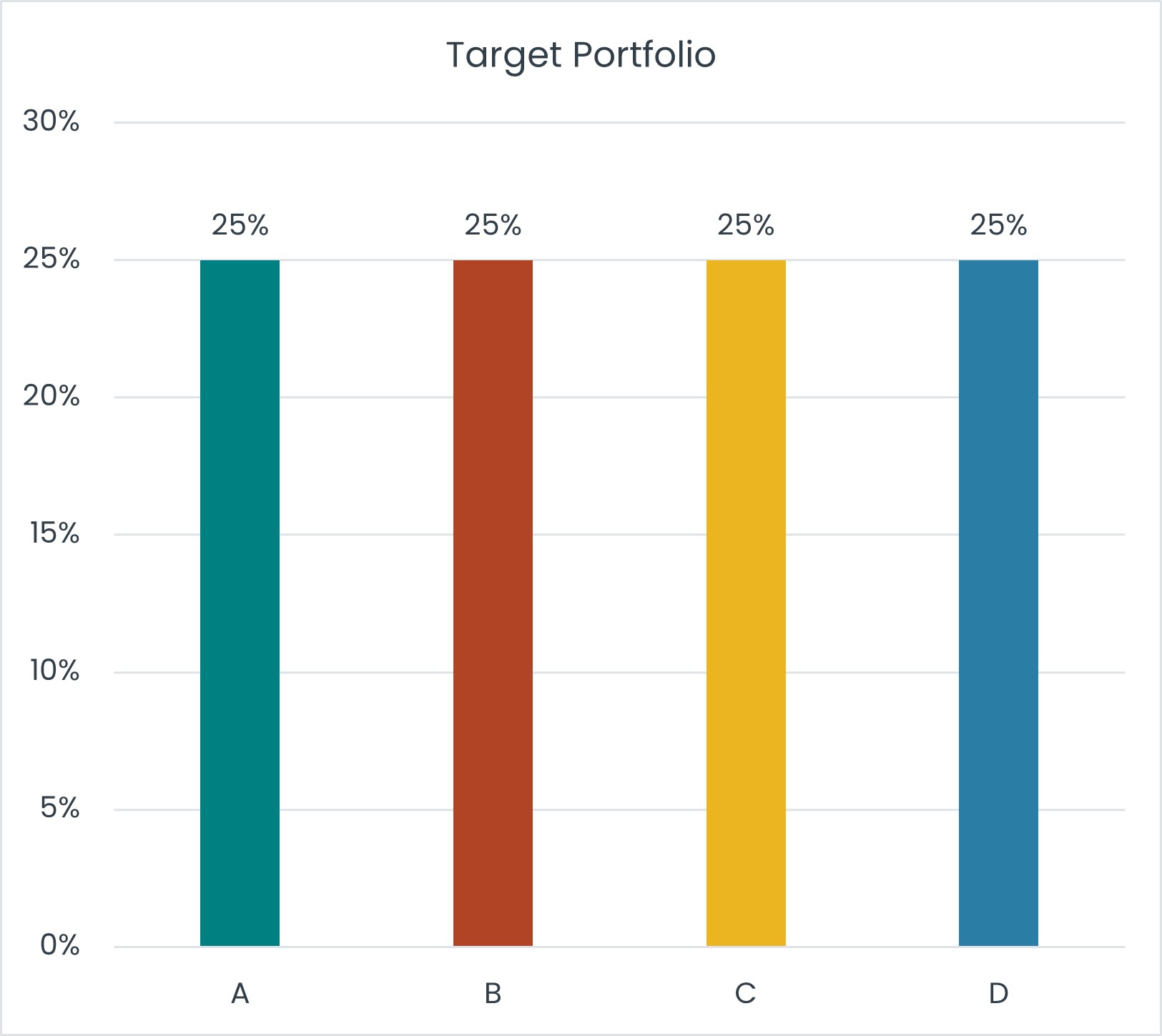
For example, you could choose 4 stocks (stocks: A, B, C, D) and weigh them equally at 25% each. This means that for every $1 you put into your portfolio, you would buy $0.25 of each company ($0.25 x 4 stocks = $1.00).
Understanding Portfolio Drift
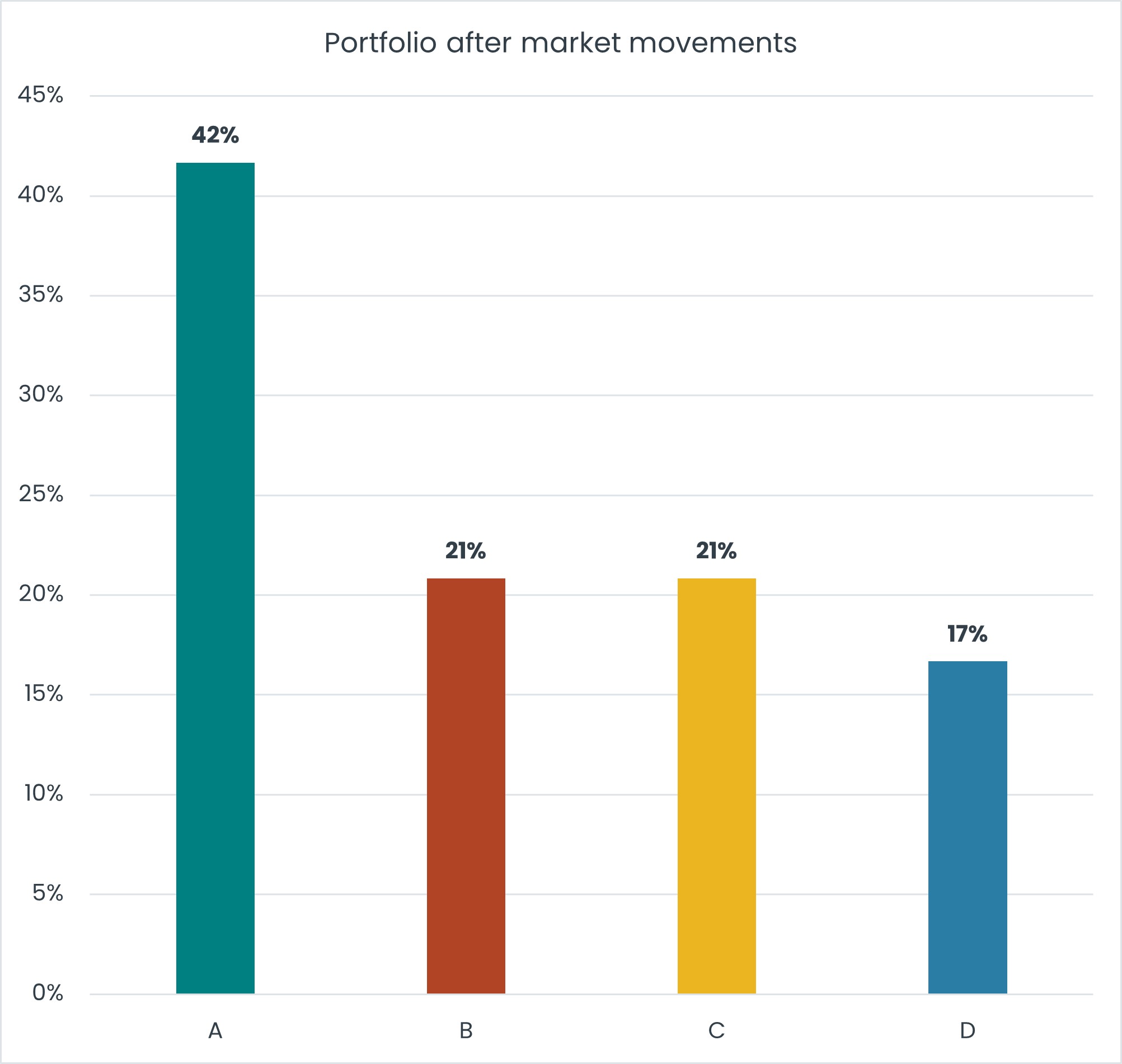
Overtime, as the companies move up or down from the movements in the market, your portfolio will move away or “drift” from these target weights. To build on the previous example, let’s pretend that company A has done very well and doubled since your initial purchase. At the same time, company D has lost 20% of its value. Your portfolio would now look vastly different from the targets you initially set.
How the Rebalance Process Works
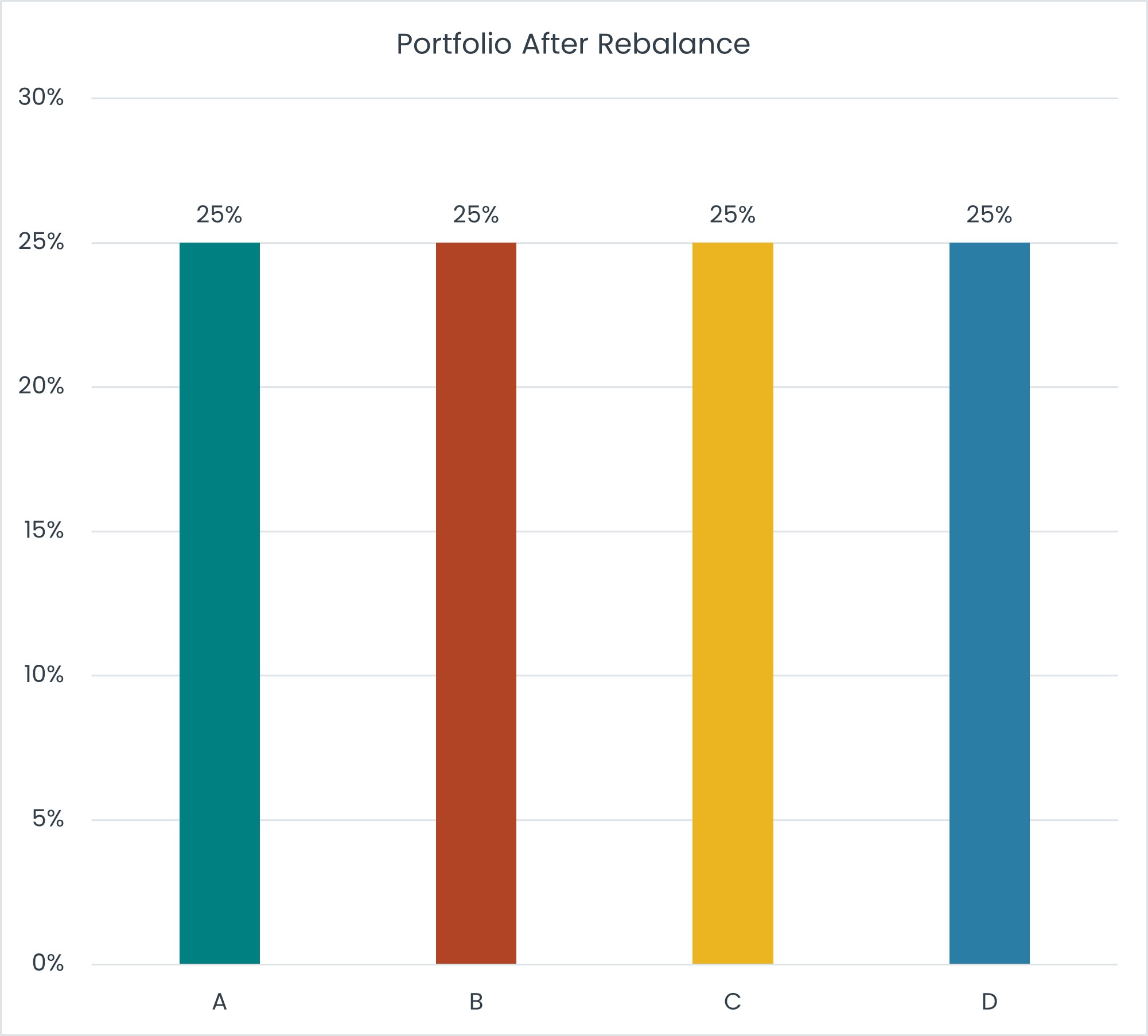
Since you are far from your initial targets (25% each), you could rebalance your portfolio. This would involve selling the companies that are above the 25% target (overweight positions) and buying those that are below the 25% target (underweight positions). After the rebalance, your portfolio will be back in line with your desired asset allocation.
Why Rebalance?
Rebalancing your account ensures that your portfolio stays properly aligned with your risk tolerance and long-term goals. With correct handling, rebalancing allows you to trim your winners, securing those returns, while purchasing some of the companies you hold that may be in a near-term downtrend.
Managing the Stock and Bond Mix
If your portfolio has more than one asset class to manage risk, such as stocks and bonds, rebalancing plays an even more critical role. Whether through an ETF, mutual fund, or an individual bond, fixed income positions tend to pay a sizable portion of their return through dividends. On the other hand, equity positions tend to grow primarily through price change. This dynamic means that with enough time, it is highly likely that your stock/bond mix naturally drifts out of alignment, potentially putting you into a higher risk category than intended.
How Often Should I Rebalance?
It is good practice to meet with your advisor at least annually to review your account and determine if a rebalance is needed. Investment managers can utilize a wide range of targets and strategic plans when managing a strategy, some of which are more complex than others. This means that there is unfortunately no “one size fits all” answer to this question.
Potential Risks of Frequent Trading
Rebalancing too often can lead to some negative drags on your performance, such as:
- Realizing a sizeable amount of short-term capital gains liabilities
- Trading related expenses and fees
- Potentially selling high-performing assets too early
Conclusion: Maintaining Your Personal Financial Roadmap
Ultimately, rebalancing is the tune-up that prevents your portfolio from drifting away from your original strategy over time. While this process helps keep your long-term goals on track, it should be done with a thoughtful approach to avoid unnecessary fees or tax burdens. Reviewing your portfolio with your advisor at least once a year is an excellent way to determine if a rebalance is necessary to keep your investments aligned with your personal financial roadmap.